
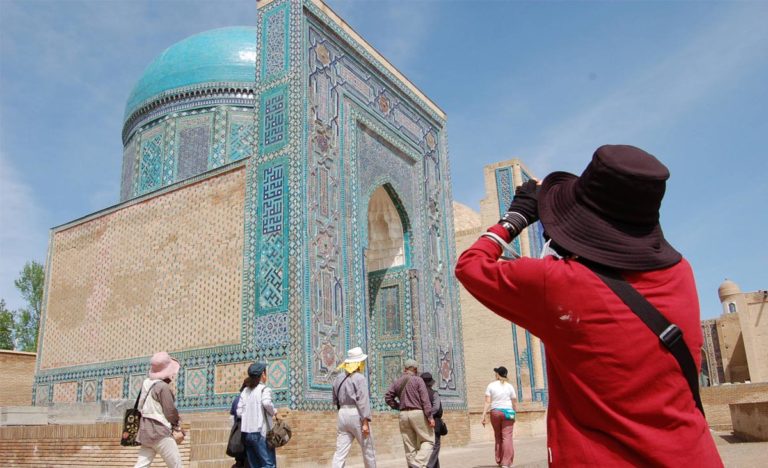
Uzbekistan attracts the attention of the whole world with its numerous ancient historical and architectural monuments, rich nature and rapid modern progress.
For centuries, Uzbekistan was located at the intersection of trade routes of the Great silk road, which was followed by merchants and pioneers, geographers and missionaries, invaders and conquerors. Nowadays, Uzbekistan is an attractive tourist destination for enterprising people interested in culture and history, traditions, exotic countries.
Heritage
Uzbekistan is proud of its architectural monuments, which have come down to us from the times of our ancestors. Ichan-Kala complex in Khiva, and the historical centers of Bukhara, Shakhrisabz and Samarkand are included in a special UNESCO list — «World heritage». Unique monuments and architectural structures in these cities are a reflection of the era that played a significant role in the history of the country.
Tashkent
Tashkent is the capital of modern Uzbekistan and one of the largest cities of Central Asia. Both in the distant past and in the present, Tashkent is an important international transport hub, with many countries of the world through the local air carrier Uzbekistan Airways and international airlines.
Tashkent is one of the oldest cities in the world. In 2009, it celebrated its 2200th anniversary. At the same time, it is a modern industrial center, where there are more than 500 companies producing a variety of products, ranging from aircraft to tractors, from TVs to textiles and shoes. Tashkent is rapidly becoming a modern developed international metropolis, where ancient buildings are harmoniously combined with modern skyscrapers.
Today there are about 100 museums in Uzbekistan and almost half of them are located in the capital of the country. Each of them reflects the rich cultural and spiritual heritage of the Uzbek people. In the center of the capital, there is the State Museum of Temurids, crowned with a huge blue dome, reminiscent of the ancient dome of Samarkand. Its exhibits show the formation of statehood in the middle ages on the territory of Uzbekistan, and reflect the development of science, culture and art since the time of Amir Temur.
Samarkand
For centuries, the cities of Uzbekistan have played an important role in the life of the Great silk road, an ancient, transcontinental highway. But the city of Samarkand was the only one named «the heart of the Great silk road».
«Pearl of Islamic architecture», «Mirror of the world» have characterized Samarkand since ancient times. A contemporary of Rome, Athens and Babylon, this city has already celebrated its 2750th anniversary. The city reached its heyday during the reign of Amir Temur, the greatest military leader and ruler of Central Asia after Genghis Khan, when Samarkand was chosen as the capital of the powerful Empire of Transoxiana. At this time extensive town-planning work is carried out. Here, in Samarkand, the great ruler gathered skilled architects and craftsmen whose works of art have survived the centuries. His grandson Ulugbek continued these traditions. Today the monuments of Samarkand are majestic and beautiful. In this city you can feel the breath of history, which is stored in ancient ruins, madrasahs, mausoleums and minarets.
The legendary Samarkand Registan square is a unique architectural monument of Central Asia. Since ancient times, this square has been a commercial and public center of Samarkand. Here and to this day, after centuries, towering masses of ancient walls and towers of three beautiful madrassas — Ulugbek, Sherdor, Tilla-CORI.
Gur-Emir mausoleum is another pearl of ancient Samarkand. The remains of the Great Emperor, his two sons and two grandchildren, including the outstanding scientist and thinker of the East, Mirzo Ulugbek, rest in this mausoleum. Like a Bud of blue Tulip with tightly folded petals. Guri-Amir mausoleum is very popular among tourists.
Registan square, Gur-Emir mausoleum, Bibi-Khanym, Shahi-Zinda, Ulugbek Observatory, this is not a complete list of all those monuments that fascinate visitors to the ancient city.
noble Bukhara
Bukhara has long been the center of a densely populated oasis. Its history dates back 2500 years. Keeping the cozy atmosphere and concentrating more than 140 monuments of ancient architecture, Bukhara remains a favorite place for tourists.
Mausoleum of Ismail Samani, covered like lace, the majestic fortress of the Arc, as the strengthening of the residence of the rulers of Bukhara, Kalyan minaret, a living maze of numerous mosques and madrasas, caravanserais, baths — all these monuments are unique gems of Holy Bukhara.
Khiva
The only fully preserved city of the Great silk road — Khiva. It is rightly called the «open-air Museum». Most of the architectural monuments of the city core — Ichan-Kala date back to the end of the XVIII — first half of the XIX century. Since Khiva lay at an important crossroads of the Great silk road and caravan roads converged here, four monumental gates oriented to the cardinal points were built in the walls of Ichan-Kala. From the height of the fortress wall offers a stunning panorama of Khiva – the city of this Eastern fairy tale.
The sky is pierced by a string of minarets, and among them the highest minaret in Uzbekistan is Islam-Khoja. The domes of mausoleums and mosques, sparkling with blue tiles, rise above the flat roofs of the houses. Khiva retained some of the Khan’s palaces and the most famous of them, the Tash-Hauli Palace, a huge complex, which includes the ceremonial halls of the Palace, the Khan’s quarters, living quarters of the Khan’s wives and harem. The facade and the walls of the Palace are covered with a mosaic carpet with a magnificent majolica ornaments.
You will need a lot of days to know the splendor of this city, explore its tiny streets, and feel the atmosphere of the «open-air Museum».
Traditions.
Traditions and customs of Uzbek people living on the crossroads of the Great silk road, has been formed for many centuries as a result of the interaction of the rites of the Zoroastrians, the Sogdians, the Bactrians, the traditions of nomadic tribes and under the influence of Islamic traditions.
Traveling to Uzbekistan, tourists can not only see the architectural gems of the country, but also take part in the celebration of national holidays. (For example, Navruz is a New year holiday of spring, which is celebrated on the day of the equinox on March 21)
Each route includes a visit to the national house, where tourists can get acquainted with the way of life of the local population, taste the national Uzbek cuisine and enjoy folk shows.
Special attention should be paid to the national Uzbek cuisine, which is characterized by great diversity. Dishes based on the rich experience of ancestors are a reflection of the lifestyle and culture of the Uzbek people. Delicious Uzbek treats filled with aromas of spices will not leave indifferent even the most demanding gourmet.
Bazaars
The traditional idea of the Eastern Bazaar, abundant, colorful, noisy, becomes a reality in the markets of Uzbekistan. A good Bazaar should break from the goods, there should be a game of color, raised voices and exclamations should be heard – bargaining is appropriate here!
In the fruit and vegetable rows at any time of the year eyes run away from the abundance and diversity of goods. But the Oriental Bazaar is especially impressive in summer and autumn.
Active life in the Bazaar begins early in the morning and ends only after dark. The shouts of traders, car horns, the sounds of national music, the smells of spices and roasted meat, the riot of colors of fruits and vegetables in the shopping arcade create a unique atmosphere of the Oriental Bazaar.
Hotels
The caravanserais of the past were replaced by modern and comfortable hotels. Hotels located in the tourist cities of Uzbekistan, will satisfy the desires and needs of each of our guests. The choice will stand not only before the «stars» of hotels, but also their location, design and comfort. For those who choose their temporary home, prefers the European style, there are hotels with modern interiors, for those who want to immerse themselves in the true Oriental flavor there are hotels that will welcome their guests with wide-open carved doors, aiwans on the terrace, colorful carpets.
Today there are about 350 hotels in Uzbekistan, which are happy to host tourists and provide services that meet international standards.
Transport
Uzbekistan today has a developed tourism infrastructure. You do not need to spend months in order to get to your destination, as it was during the silk road. Today, a trip to Uzbekistan is a quick and comfortable movement on Board the aircraft to the largest cities of the country.
Tourists can enjoy the beautiful scenery of the country from the Windows of fast and convenient cars, buses or high-speed trains.
Active tours
Uzbekistan is famous not only for its history and legendary architecture. It is also an attractive destination for active tourism. It successfully combines modern comfort and wildlife – primarily due to the special geographical location of our country. After all, in Uzbekistan there are almost all kinds of natural landscape – mountains, valleys, steppes, deserts, rivers, lakes.
Tracking
All the charm of the extraordinary nature of Uzbekistan give the opportunity to experience Hiking in the Western Tien Shan, or the Heavenly mountains. In search of extreme sensations, numerous climbers and skiers rush to the Chimgan valley to overcome the peak of Big Chimgan, which rises to 3309 meters (10850 feet).
Horseback riding
The romance of equestrian tourism attracts people of all ages and temperament, and the unique climatic conditions allow you to engage in horse riding all year round.
One of the most popular routes is horse riding in Ugam-Chatkal national Park, known for its rich flora and fauna. Just eighty kilometers from Tashkent in a picturesque valley, lying at an altitude of 1600 meters above sea level at the foot of the Big and Small Chimgan, is a resort complex «Chimgan Oromgohi», designed for lovers of equestrian tourism. Here you can ride horses of local breeds, such as Kurama and karabair, as well as the Akhal-Teke breed.
Impressions of traveling through the mountains, where the fresh, clean air is filled with the finest aroma of countless herbs and flowers, the creaking of the saddle, the measured clatter of hooves and a romantic evening meal by the fire under the bottomless mountain sky with myriads of stars will long remain in memory.
Camel Safari
Go back to the time of the busy movement of caravans along the Great silk road, you can make a camel Safari through the Kyzylkum desert. Sand dunes, merciless sun, rare saxaul Islands, camel thorns and sand, sand, sand …
In early spring, thanks to the life-giving moisture of the rains, the desert is covered with purple poppies and an emerald carpet of grass, which soon disappear, leaving a single Golden sandy canvas. Tourists are invited to change comfortable cars for camels and start their exotic journey. A portion of unforgettable impressions is provided to you. Just imagine, blood-red sunsets, shimmering Golden sand, overnight in yurts, exotic dishes of national cuisine, folk show and a sea of warmth…what could be more pleasant?!
Heli-skiing and snowboarding
The relatively mild climate, almost complete absence of wind and three hundred Sunny days a year, a large selection of trails for skiing, slalom and downhill create excellent conditions for winter holidays in the mountains of the Western Tien Shan.
In recent years, the resort area «Chimgan-Charvak-Beldersay» was chosen for their classes by fans of Heli-ski and freeride – a new but rapidly developing extreme form of recreation. It is here, according to freeride enthusiasts, is one of the most attractive places in the world for downhill skiing and snowboarding on virgin snow. After all, the mountains of the Western Tien Shan have an extremely favorable combination of quality of snow cover, terrain and climatic conditions.
Downhill skiing and snowboarding on untouched snow cover in these mountains are usually carried out at marks from 4100 meters to 1500 meters above sea level.
Rafting
Asian Switzerland… So often called located at the junction of Uzbekistan, Kyrgyzstan and Kazakhstan mountain area of the Western Tien Shan. This territory is no less attractive than the famous Alpine country, and also attracts travelers from all over the world.
Rafting on the Chatkal river is the most popular among thrill-seekers. Travelers are attracted by the prospect of multi-day rafting on the route of the fifth category of complexity, a variety of landscapes and obstacles. In the way have to overcome waterfalls and plum, cascades of rapids, shallow rocky areas with fast currents – shiver, powerful whirlpools, rocky narrowing and rising above the waves a sharp stone teeth.
Golf
Ideal climate, clean air, stunning views, natural landscapes…one Hundred and eight hectares with 18 holes on the evergreen lawns, with gentle hills, spreading crowns of trees, lakes and waterfalls, serving as natural barriers to play, are belonging to the «Tashkent Golf club on the lakes». Picturesque lakes surrounding the fields impart peculiar characteristics to each of 18 holes. Meandering along the lakes and waterfalls, the fields make an atmosphere of an oasis typical for inland plains of Central Asia.
Government and tourism
In Uzbekistan, the tourism industry is one of the youngest, but in its development it is ahead of many other industries.
The potential for the development of international tourism in our region is huge. Just two decades ago, Uzbekistan was not known to the world as a promising tourist destination. Since independence, Uzbekistan has developed radically new principles of state policy in the field of tourism. On July 27, 1992 by the decree of the President of the Republic of Uzbekistan the national company «Uzbektourism» was established, which was entrusted with the task of implementing the state policy in this direction, the formation of the national model of tourism development.
The national company coordinates the activities of tourist organizations of the Republic, stimulates the development of all types of tourism, provides training, promotes investment in the creation of material and technical base and infrastructure of the industry,
Since 1993, our country is a member of the world Tourism Organization of the United Nations (UNWTO), since 2004 in the «heart of the silk road» — Samarkand operates UNWTO support office, coordinating the development of tourism on the transcontinental highway.
The government of the country is carrying out large-scale work in the field of modernization of the tourism industry, improvement of transport and hotel infrastructure of the country, as well as the development and improvement of the legal framework in the field of tourism.
In order to promote the country’s tourism product to foreign markets, a marketing project of study tours is being implemented — «Mega-info-tours» to Uzbekistan for representatives of foreign travel companies and the media. Such tours allow you to expand the periods of tourist seasons, optimize the timing of mass flows of tourists to our country, as well as to show that Uzbekistan is equally attractive at any time of the year and each season is beautiful and interesting in its own way.
The legendary past, historical and architectural heritage of the silk road, unique corners of nature, national crafts passed down from generation to generation, hospitality and humane traditions of the people – all this attracts to Uzbekistan a lot of people from different parts of the world, delights, amazes , pleases every traveler.
WELCOME TO UZBEKISTAN!